DIY Idea
A Family Recipe Book — Recipes and Stories from the People Who Cooked Them
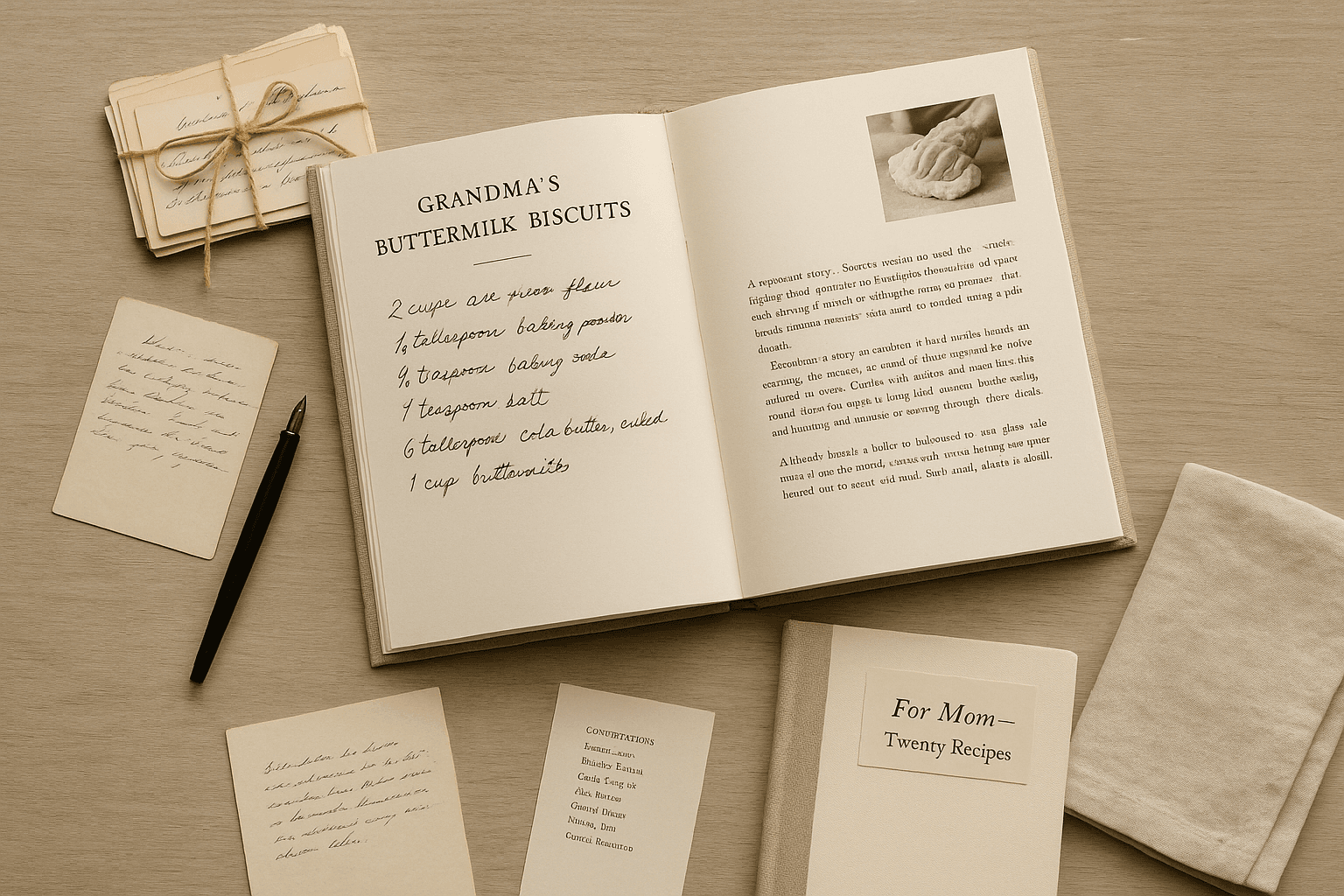
A cookbook of twelve to twenty family recipes, each gathered from the person who actually cooks it — with the story attached and the handwriting kept. For someone in your family who carries the kitchen. About a month from first email to finished layout (three weeks of that is waiting for recipes), plus the printer's production and shipping time.
Materials
- The contributor list: twelve to twenty contributors — family, close friends, the neighbor who taught them the bread
- The contributor brief: one short email or text — what to send, what story, what photo, what deadline
- The capture method: a simple Google Form, a shared Dropbox folder, or just a single inbox folder where everything lands
- The format decision: pick one — hand-bound blank cookbook (Etsy, ~$30), printed at a local print shop, or an online photo-book service (Blurb, Artifact Uprising, Mixbook)
- The handwriting plan: a scanner or phone-scan app for original handwritten recipes — DO NOT retype the ones written by hand
- The kitchen wrap: a single nice kitchen item to give alongside — a wooden spoon, a linen apron, a small tin of finishing salt — chosen for them, not generic
The recipe is the doorway. The story is the room.
Instructions
- 01
Build the list before you write the brief. Twelve to twenty names — anyone who has fed them, learned from them, or shared a table. Make the list secret. If you need help remembering, recruit one trusted family member sworn to confidence.
- 02
Write one short brief and send it to everyone the same day. Three asks: a recipe they associate with [recipient's name], a two-to-four-sentence story behind it, and a photo if they have one (of the dish, themselves cooking it, or a memory with the recipient). Give a real deadline — three weeks is right. Tell them handwritten is welcome and preferred for ones they've made by hand for years.
- 03
Collect and curate, don't compile. Aim for twelve to twenty recipes; if more come in, you choose. Group them: breakfasts, mains, sides, sweets, holiday-specific. Cut duplicates. Edit lightly for typos but keep the contributor's voice intact. Never paraphrase their story.
- 04
Pick the format and brief the maker. Hand-bound cookbook (lined pages, you write or paste in each entry) for the most personal version; a print-shop perfect-bind with your layout files for mid-effort polish; an online photo-book service for the cleanest finish. Spec the size (8 × 10 is the recipe-book standard), the paper (cream uncoated reads warmest), and the cover (cloth or linen-wrap if the service offers it).
- 05
Lay out one recipe per spread, with the story on the facing page. Contributor name at the top of each recipe. Photo where it earns its place — not every recipe needs one. Include a dedication page, a one-page introduction in your voice, a table of contents, and an end-of-book contributors index with names + how they know the recipient.
- 06
Reserve the last six to eight pages as blank. For recipes the recipient will add. Title them Yours to Add. That way the book keeps growing after you give it.
What to write inside
For [their name] —
This book holds [number] recipes from [number] people who care about you and your cooking. Every recipe came with a story; I kept the stories. Some came in their own handwriting; I kept that too.
It's not finished. The last few pages are blank on purpose — for the recipes you'll add next.
— [your name]
Sign however you would — With love, From all of us, All my best, or just your name.
Pro Tips
- Keep their handwriting. When a contributor sends a recipe card or a photographed page in their own hand, scan it and reproduce it as an image in the book, not as retyped text. The handwriting is half the gift. Retyping flattens forty years of marginal notes into anonymous serif.
- Brief contributors on stories, not just ingredients. The recipes alone make a cookbook. The stories make a keepsake. In your brief, ask one specific question — what's the memory this recipe carries? — and tell them two to four sentences is enough. Most will write more.
- Ask people who know them well. Family and close friends, yes. Old colleagues and distant cousins, maybe. Acquaintances and people who might have a recipe, no — the book gets diluted and the contributors stop reading each other's stories. A dozen people who know them well beat forty who don't.
- Plan the reveal separately from the book. The book is the artifact; the reveal is its own beat. A small dinner with a few contributors present; a wrapped delivery before a milestone meal; the printed book set on a kitchen counter where they'll find it. Don't bury the moment in a thank-you speech.