DIY Idea
A Spy Mission Dossier — Six Brave-Kid Missions, One Envelope
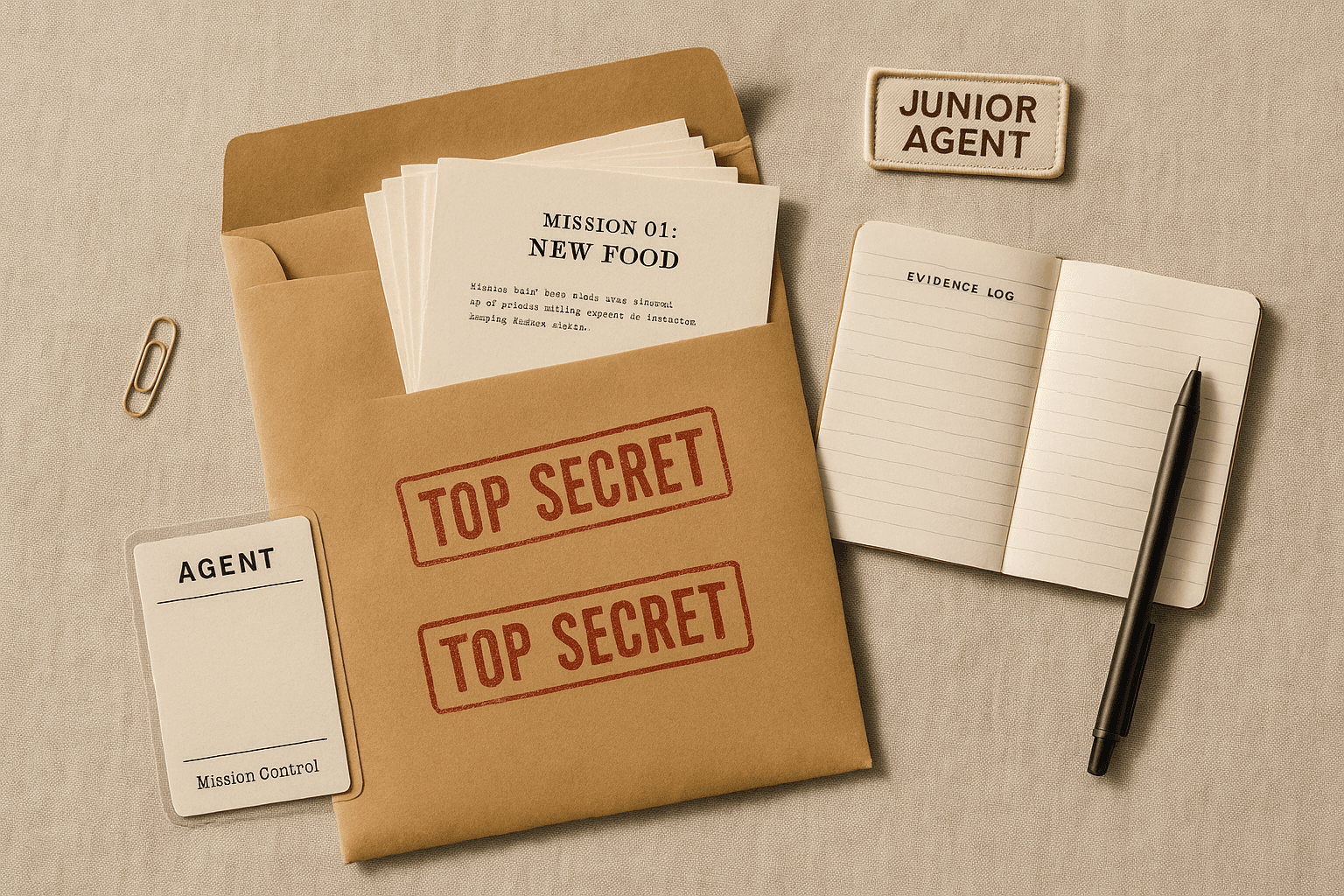
A 'Top Secret' envelope holding six small missions — try a new food, talk to a new kid, finish a hard chapter — with an Agent ID card, an evidence log, and a debrief. Built for a kid ages eight to thirteen. About an hour to write, print and assemble.
Materials
- One 9 × 12 in (A4-size) kraft envelope with a string-and-button closure, with TOP SECRET written across it in red marker
- Six mission briefs, typed in a serif font and printed one per sheet (a home printer and seven sheets of off-white paper: six briefs and the ID card), each signed Mission Control
- An Agent ID card, credit-card size, with the kid's photo (a small print or a cut-out from a spare school photo), code name, and AGENT across the top, slipped into a clear credit-card-size badge holder
- A small evidence log notebook (A6, soft cover), a black gel pen, a paperclip, and a black and a red marker
- Optional: one spy gadget, such as an invisible-ink pen or a printed cipher sheet
- A small rank patch or sticker for the first debrief — Junior Agent embroidered or printed
The envelope isn't the gift. The completed missions are.
Instructions
- 01
Pick six missions that fit the kid. Skip the generic be brave prompts. Use real things they've been circling — order at the counter yourself, introduce yourself to the new kid in math class, finish the chapter you've been stuck on since Tuesday, try the soup you said you'd hate, go up the high slide once, call grandma without a script. Six, no more — the count is the discipline. Make Mission 01 the easiest, something they'd almost do anyway. Help is allowed: agents can call for backup.
- 02
Type each mission on a sheet. Four lines, in spy style: the mission title, the objective, the evidence, the debrief. For example: MISSION 01: NEW FOOD. Objective: Try three bites of the soup you said you'd hate. Evidence required: Write one word in your log for how it tasted. Debrief: Report to Mission Control after dinner. Sign every one Mission Control with a typed signature line. The envelope's weight is half the gift; thin briefs feel thin.
- 03
Build the dossier. Stack the six briefs, the Agent ID card on top, the evidence log paperclipped to the side. If you bought a gadget, slide it in. Seal the envelope. On the front, write EYES ONLY: AGENT [code name] in black marker. Leave it on their pillow, not their desk.
- 04
Run the debrief like Mission Control would. When they bring back evidence, sit at a table. Read the log. Ask three questions — what was the hardest part, what surprised you, what mission do you want next. Hand over the rank patch only after the first completed mission. The ritual is what builds the gift.
- 05
Promote on a real schedule. Three missions = Field Operative. Six = Mission Commander. The promotion happens at the debrief, not by text. If they stall on a mission for two weeks, retire it and reissue with a different one — no shame, no lecture, just a new brief.
What to write inside
Agent [Their name],
You've been selected for six missions. Each one is small. Each one is real. Complete one, log the evidence, and bring it back to Mission Control for a debrief.
The rule: you pick the order. You pick the day. You can decline any mission — just send word back. There are no bad outcomes, only debriefs.
Mission Control, — [your name]
Sign however you would — Mission Control, HQ, your usual nickname, or just your name.
Pro Tips
- Make the first mission an easy win. The first one sets whether the dossier becomes a real thing or sits on the shelf. Pick something they'd almost-do anyway and frame it as the mission — they win, they trust the system, the harder ones earn their attempt.
- The evidence log is the gift. Years from now, the dossier itself will be in a drawer. The log — Mission 2 complete: I asked Mrs. Reyes a question even though my hand shook — is what they'll find at twenty-two. Choose a notebook good enough to keep.
- Don't grade the missions. Mission Control debriefs, doesn't score. What was the hardest part and what mission do you want next are the only two questions that matter. Good job lands lighter than you went up the high slide — that's the one you've been staring at all summer.
- Reissue, don't expand. When the six are done, retire the dossier. Don't add missions to the same envelope — that turns the gift into homework. If the format worked, start a new dossier six months later with new missions calibrated to who they are now.