DIY Idea
A Caregiver's Binder — Coupons, Quick Pages, a Pouch for Hard Weeks
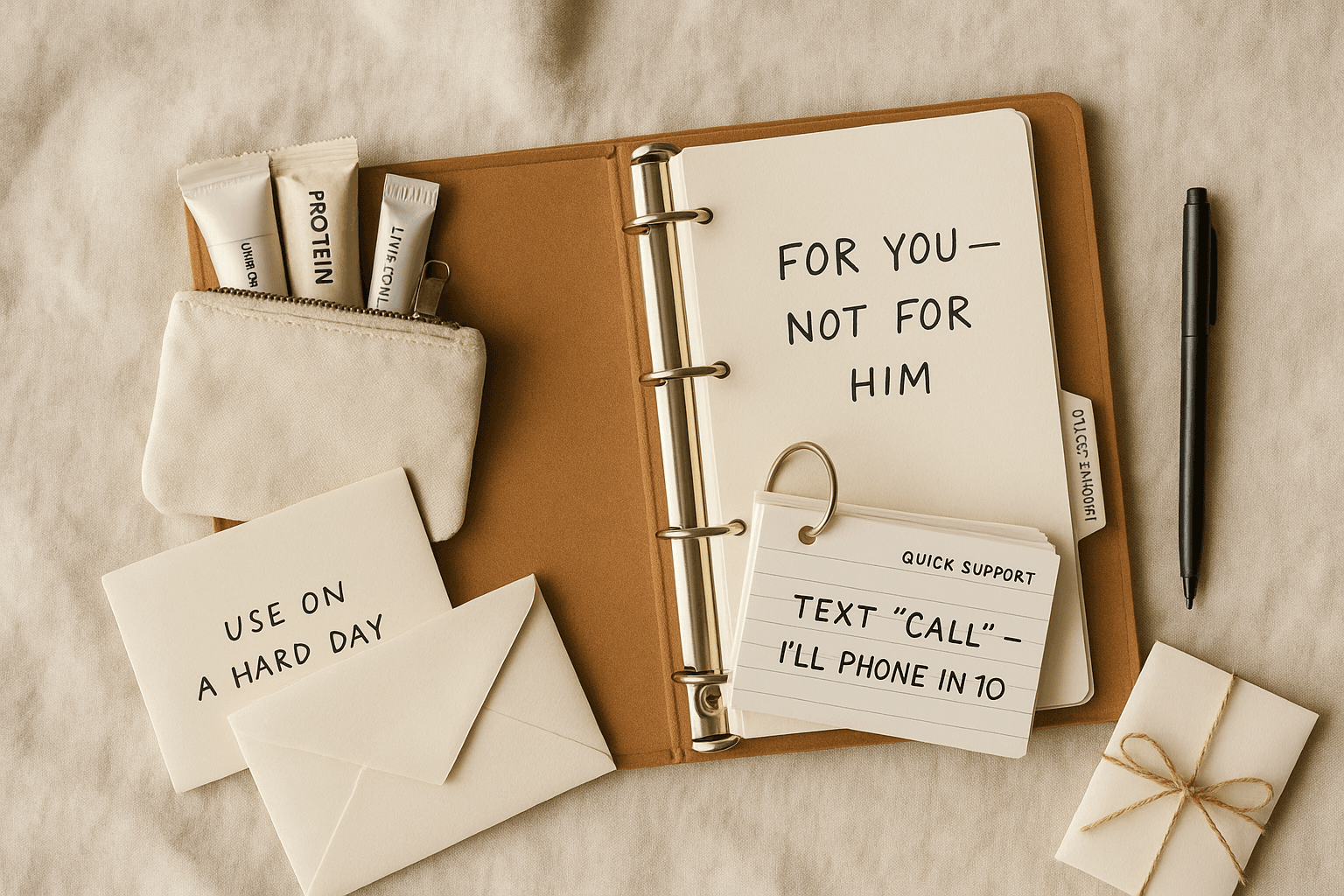
A small binder built for someone caring for a parent — a ring of Quick Support coupons, sheet-protected pages for meals, appointments and phone numbers, and a pouch with the things they'd never buy for themselves. For the caregiver, not the patient. An afternoon to assemble.
Materials
- The binder: one 1-inch 3-ring binder in A5 or 5.5 × 8.5 in size, five labeled divider tabs, ten sheet protectors
- The coupon ring: eight blank 3 × 5 index cards, a hole punch, one 1-inch binder ring, a fine-tip black pen
- The quick pages: a meal-formula sheet, an appointment tracker, a
Numberspage and aTexts to sendpage (each one printed or hand-ruled, slipped into a sheet protector), plus one fine-tip dry-erase marker for the tracker - The pouch: one zip pouch, handed over with the binder — pack hand sanitizer, unscented lotion, lip balm, electrolyte sticks, two protein bars, a tea-or-coffee packet
- The note layer: one handwritten letter on cream cardstock, two small printed photos of the two of you, and one $25 food-delivery card in an envelope marked Use on a hard day
Caregivers don't ask. The binder asks for them.
Instructions
- 01
Set up the binder. Five tabs in this order: Quick Support, Meals, Appointments, Numbers, Notes. A sheet protector right after each tab — the page they need lives in front, no flipping. Five protectors are used; the other five are spare for pages they add. Title the cover For [their name] — when you don't know where to start.
- 02
Write the Quick Support coupons. Eight cards, eight specific offers — not vague let me know if you need anything. Examples: Text me "CALL" and I'll phone you in ten minutes. One insurance call, you on speaker, me doing the talking. Dinner Monday Wednesday Friday — your pick. One thirty-minute errand run, send me the list. Only write a response time and an offer you can actually keep. Hole-punch, put on the ring, clip to the binder.
- 03
Build the three quick pages. (a) Meal formulas — six no-think dinners with exact grocery items (rotisserie chicken + microwave rice + bagged salad); (b) Appointment tracker with five columns (date, who, location, questions, follow-ups) — sheet protector + dry-erase marker so it resets each week; (c) Numbers — blank fields for the pharmacy, the case worker, the patient portal's web address and phone line. Phone and member numbers only; passwords stay out of the binder. The blanks are the work.
- 04
Pack the pouch with things they'd never buy. Caregivers run out of lip balm before they restock. Sanitizer, unscented lotion, electrolyte sticks, two bars, one tea or coffee packet, the Use on a hard day envelope with the food-delivery card. Zip it and hand it over with the binder; packed this full it won't sit flat inside a 1-inch binder.
- 05
Write the letter for the Notes section. One page, in your hand. Acknowledge what they're carrying without solving it. Name one specific thing you've noticed they're doing right (the way you call the nurse back, the way you sit with him in silence). Slip in two photos. The Notes tab is what they reach for when no one's checked on them in three days.
What to write inside
For [their name] —
This isn't for [parent's name]. This is for you.
You don't have to read it all today. The coupons are real — text me. The pouch is for the small things you've stopped noticing you need. The Use on a hard day envelope is exactly what it says.
You're doing the hardest thing. I see it. No reply needed.
— [your name]
Sign however you would — With love, In your corner, Thinking of you, or just your name.
Pro Tips
- The binder is for the caregiver, not the patient. This is the most-confused rule of the kit. The meds tracker, the symptom log, the Sleeping/Awake card — those go to the patient (see A Recovery Command Center). This binder is for the person at the bedside. Build it for their fatigue, not the patient's recovery.
- Pre-write the texts so they don't have to. Put a Texts to send page behind the Quick Support tab with five ready-made lines — Tonight is hard. Can you just sit on the phone with me? / I need a 15-min break, can you come now? / I don't need advice, I need company. Text them the same lines too, so they can copy one straight from your message. When you're worn out, finding the words is the hard part; this does it for them.
- Drop it off and leave. Don't watch them open it, don't make them say thank-you on the spot. Hand it over, name where the Use on a hard day envelope is, then leave. The gift's value is not having to perform gratitude when you're depleted.