DIY Idea
An Audio Story Keepsake for Someone Older — One Story, Their Voice
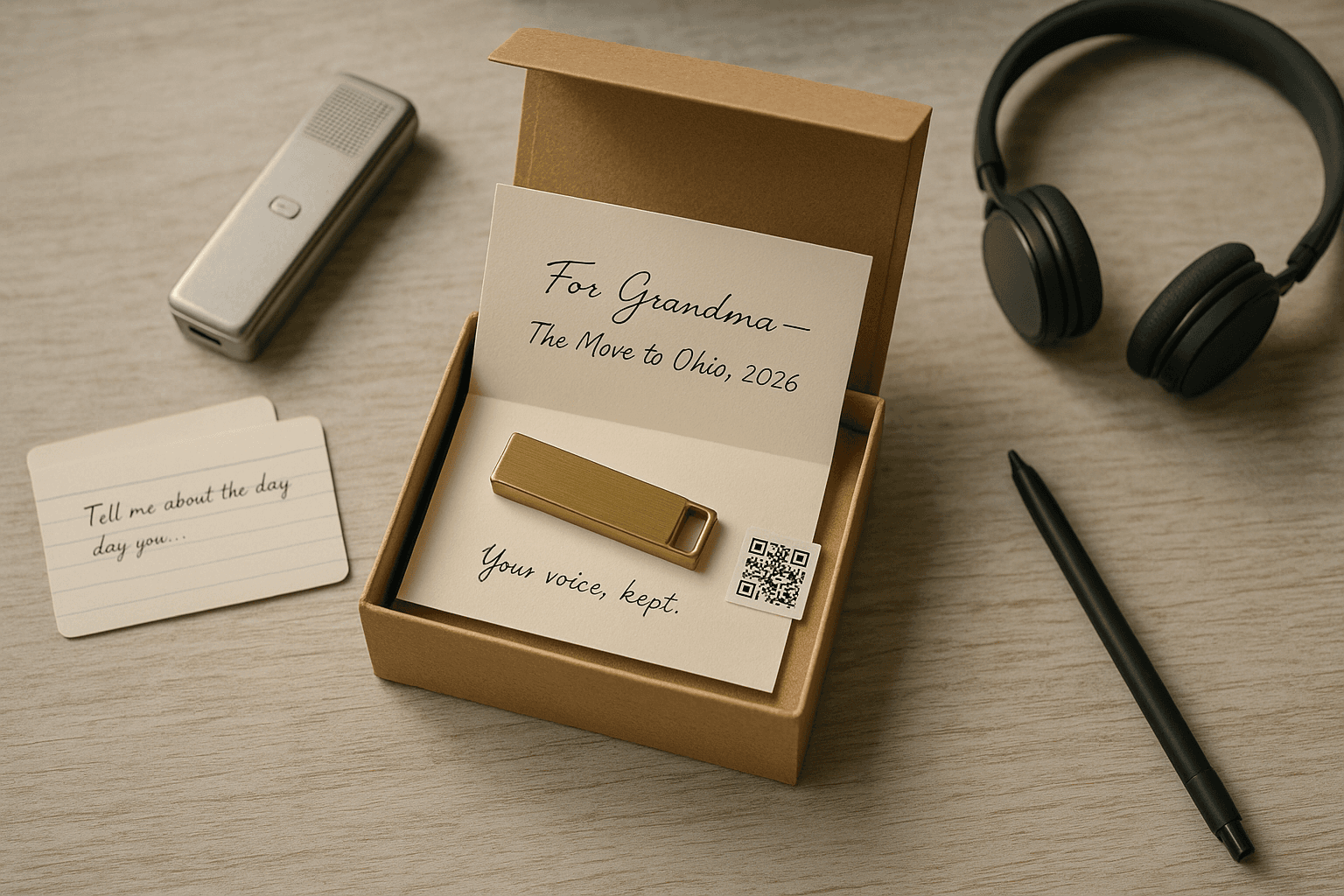
A single recorded conversation — one good story in their own voice — saved to a small USB, wrapped with a handwritten card that names what's inside. For someone older you care about. An afternoon to record and package.
Materials
- A smartphone or basic voice recorder — whatever you already own; the built-in mic is fine. You'll also need a computer with a cloud storage account (Google Drive, Dropbox or iCloud) and a printer
- A quiet room with soft furnishings (couch, rug, curtains) to dampen echo
- Three to five open-ended prompts on a folded index card
- A USB drive (8–16 GB is plenty) that fits a port on the computer they'll use (USB-A or USB-C) — wood, brass, or a slim metal style that doesn't look like office supplies
- A small kraft or linen gift box, sized to hold the USB and the card
- A blank notecard and a fine-tipped black pen for the handwritten card, plus a sheet of printable sticker labels for the QR code
One story, told properly. That's the whole gift.
Instructions
- 01
Pick the one story. Don't try to record their whole life — pick the one story you've already heard them tell well. How they met. The night the lights went out. The summer of the move. Aim for one good 20–40 minute conversation, not an oral history.
- 02
Write three to five prompts on a card. Open-ended, in their words if possible — Tell me about the day you... / What do you remember most about... / What would you want me to know about... Hand them the card before you start so they can think for a minute. Ask plainly whether you can record, and agree who it's for: just you and me, the family, or someone else.
- 03
Sit close, hit record, then mostly listen. Phone or recorder on the table between you, screen-down. Let pauses sit. Don't narrate. If they laugh, let them laugh. Two short follow-ups land better than ten.
- 04
Save the file with a real name. Not audio_001.m4a. Name it Grandma — The Move to Ohio — 2026-05.m4a (or whichever story). Copy it to your computer, then upload it to your cloud storage, before you do anything else. If they asked you to cut a part, cut it now, in every copy.
- 05
Load the USB and print the QR code. Drop the audio file on the USB. Share the cloud file only with the people they agreed to (add each person by email, not anyone with the link), make a QR code from that link with a free QR generator, and print it on a sticker for the back of the card. Before you wrap it, play the file from the USB on the computer they'll use, and check one of the named people can open the link.
- 06
Pack the box. USB, handwritten card, QR sticker on the back. Nothing else — no glitter, no ribbon storm. The gift is the voice. The box just carries it.
What to write inside
For [their name].
I recorded this on [date] so we'd have it — your voice, telling [the story of how you met Grandpa / what it was like growing up on the farm / whatever they actually told]. Plug the USB into your computer and open the file to listen. The QR code on the back goes to the same file in case the USB ever gives out.
Thank you for letting me hit record.
— [your name]
Sign however you would — With love, Thank you, All my heart, or just your name.
Pro Tips
- Ask first, then keep it relaxed. Ask plainly before you start recording. After that, keep the mood easy: chat, let the recorder run, and don't announce we're live now. The warm-up is often the best take, and it's theirs to keep or cut.
- Don't edit out the pauses or the laughter. They're the voice. Trim only dead air at the very start and end of the file. Resist the urge to make it sound like a podcast — it shouldn't.
- Keep your own copies. Leave the file on your computer and in the cloud after you hand over the USB. USB drives can fail, and the recording can't be made again.
- One story now beats five stories someday. If this lands, do it again next time you visit. Building a small library of single-story files over a few years is how this becomes an heirloom — not by recording it all in one sitting.